


Electromagnetic interference (EMI) shielding in high-performance electronics requires a delicate balance between thermal management and signal isolation. Honeycomb ventilation panels serve as critical components that allow air to flow for cooling while blocking harmful electromagnetic waves. For engineers and procurement officers, finding a best emi shield honeycomb supplier involves analyzing not just the materials, but the precision of the cell geometry and the integrity of the bonding process.
In industries such as data centers, marine electronics, and aerospace, the leakage of radio frequency (RF) signals can lead to system failure or security breaches. The honeycomb structure operates as a series of waveguides that are "cutoff" for specific frequency ranges, effectively creating a barrier against interference. This technical requirement necessitates a supplier capable of producing extremely tight tolerances in cell size and foil thickness to ensure the attenuation performance meets strict industrial standards.
This comprehensive guide examines the technical parameters and procurement considerations essential for sourcing high-quality EMI shielded vents. Readers will learn how to evaluate material choices, understand the impact of cell size on attenuation, and identify the manufacturing capabilities—such as vacuum brazing—that differentiate a professional manufacturer from a general fabricator. By the end of this analysis, you will have a clear framework for selecting the right shielding solution for your specific operational environment.
Evaluating EMI Shielding Honeycomb Fundamentals
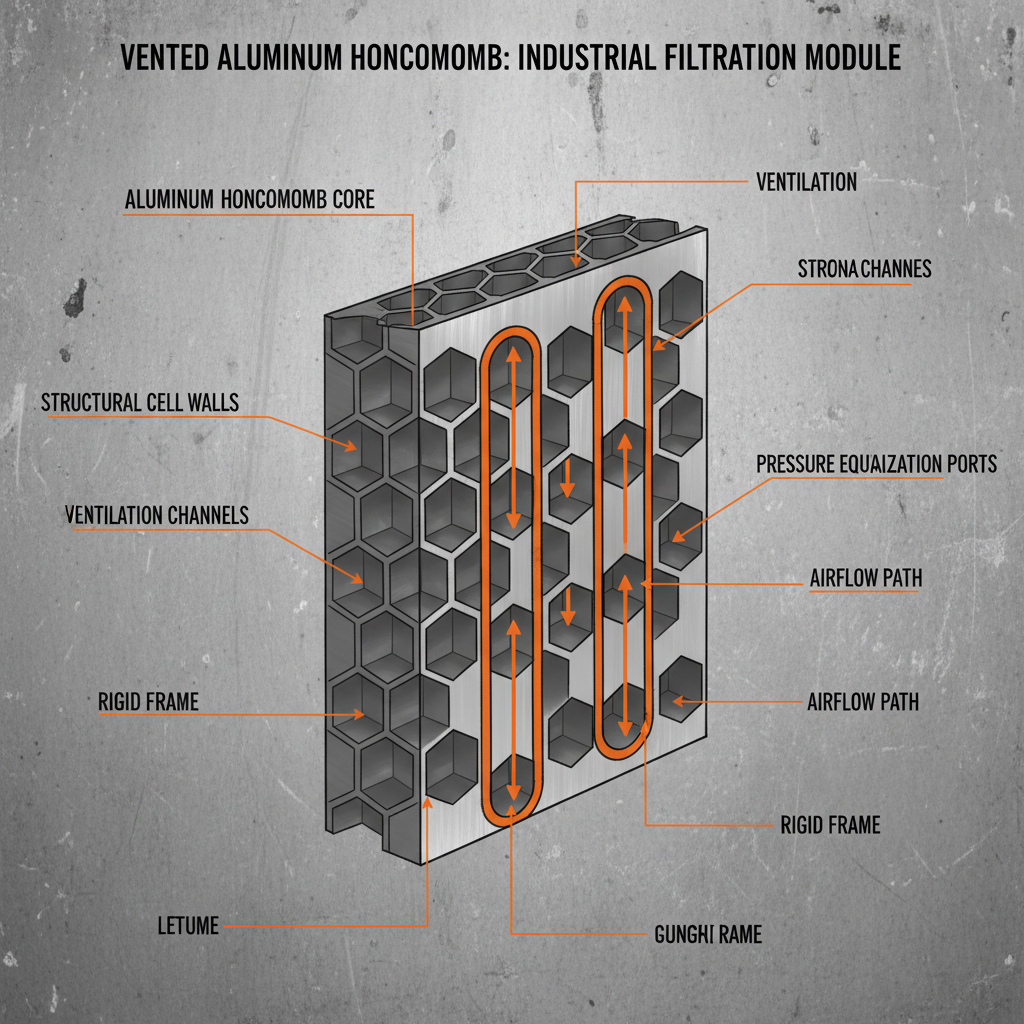
The core principle of an EMI honeycomb filter is the "waveguide beyond cutoff" theory. Each hexagonal cell acts as a waveguide; when the diameter of the cell is significantly smaller than the wavelength of the interference, the electromagnetic energy is reflected rather than transmitted. To achieve this, the geometry must be perfectly uniform. Any deformation in the honeycomb core can create a "leak" where RF energy penetrates the enclosure. This is why the precision of the stamping and welding process is paramount. From a technical perspective, the attenuation is determined by the ratio of the cell size to the thickness of the honeycomb core, meaning deeper cores generally provide better shielding effectiveness.
Beyond the geometry, the best emi shield honeycomb supplier must master the interaction between the core and the surrounding frame. A common failure point in EMI vents is the gap between the honeycomb core and the mounting flange. Professional solutions employ specialized EMI gaskets or high-precision brazing to ensure a seamless electrical bond. Without this continuity, the panel may exhibit excellent internal attenuation but fail completely due to "slot leakage" at the perimeter. Consequently, the evaluation of a supplier should focus on their ability to integrate the core into a functional, sealed assembly that maintains electrical conductivity across all joints.
Strategic Selection Criteria for Shielded Vents
Selecting the ideal EMI ventilation panel requires an engineering-led approach that balances shielding effectiveness, airflow resistance, and environmental durability. The following seven dimensions provide a detailed framework for assessing technical specifications and supplier capabilities.
Material Performance Trade-offs
The choice of metal directly impacts the attenuation performance, weight, and corrosion resistance of the vent. Stainless steel (304, 316L) is preferred for harsh environments due to its oxidation resistance, while aluminum is selected for weight-sensitive applications. Specialized materials like Hastelloy X are utilized in extreme temperature or chemically aggressive settings. The material's conductivity also affects the skin depth, which is a critical factor in RF shielding efficiency.
| Material | Shielding Property | Environmental Suitability | Key Limitation |
|---|---|---|---|
| Stainless Steel 304 | High Attenuation | General Industrial | Heavier Weight |
| Stainless Steel 316L | High Attenuation | Marine/Chemical | Higher Cost |
| Aluminum | Moderate Attenuation | Aerospace/Lightweight | Lower Corrosion Resistance |
| Carbon Steel | High Attenuation | Indoor/Controlled | Rust Susceptibility |
| Brass | Excellent Conductivity | Precision Electronics | Heavy/Expensive |
| Hastelloy X | Extreme Stability | High Temperature | Difficult Processing |
Waveguide Beyond Cutoff Principles
The cutoff frequency is the point below which electromagnetic waves cannot propagate through the cell. To maximize shielding, the cell size must be kept small relative to the target frequency. However, smaller cells increase airflow resistance. A professional supplier calculates the optimal cell diameter to ensure that the "leakage" is minimized while the ventilation rate remains sufficient to prevent equipment overheating. This requires a precise understanding of the relationship between cell geometry and frequency attenuation.
Cell Size and Airflow Dynamics
Cell sizes typically range from 0.8mm to 30mm. For high-frequency EMI shielding, sizes like 1.6mm, 2.0mm, and 3.2mm are common. As the cell size decreases, the number of walls increases, which improves shielding but creates a higher pressure drop. Engineers must evaluate the "open area percentage" of the honeycomb to ensure that the cooling fans in the cabinets can push enough air through the panel without causing excessive noise or thermal buildup.
Advanced Joining Technologies
The method used to bond the honeycomb core to the frame determines the longevity and RF integrity of the product. Resistance spot welding is common, but high-temperature vacuum brazing is the gold standard for high-reliability applications. Vacuum brazing creates a monolithic bond that eliminates gaps, ensuring a continuous electrical path and superior structural strength. Suppliers utilizing independently developed brazing furnaces can offer significantly better performance in vibration-heavy environments.
Surface Treatment and Corrosion Control
Depending on the application, a raw metal finish may not be sufficient. Electroless nickel plating is frequently used to improve conductivity and prevent oxidation on aluminum or steel cores. Other options include powder coating for aesthetic and environmental protection, or tin plating for improved solderability. The coating process must be carefully controlled to ensure it does not block the honeycomb cells or create an insulating layer at the mounting interface.
Custom Frame Integration
The frame type—whether it be "L" type, "C" type, or "H" type—must match the mounting method of the shielded enclosure. Precision CNC milling and EDM machine tools are necessary to create frames that fit perfectly into cabinets or racks. Customization should also extend to the integration of EMI gaskets, which seal the interface between the honeycomb panel and the enclosure wall, preventing any RF leakage from the edges.
Compliance and Quality Certification
In B2B procurement, certifications provide a baseline for quality assurance. ISO 9001:2015 ensures process consistency, while GJB9001C-2017 indicates a capability to meet rigorous military-grade standards. Furthermore, compliance with ROHS and SGS ensures that the materials and plating processes are environmentally safe. A reliable supplier will provide material certifications for every batch of foil used in the honeycomb core to guarantee purity and thickness consistency.
FAQ
How do I determine the correct cell size for my EMI shield vent?
Determining cell size depends on the maximum frequency you need to block. Smaller cells (e.g., 1.6mm to 3.2mm) provide higher attenuation for high-frequency signals but restrict airflow more than larger cells. You should calculate the required cutoff frequency based on your RF specifications and then balance this against the CFM (cubic feet per minute) requirements of your cooling system to ensure the equipment does not overheat.
What is the difference between spot welding and vacuum brazing for honeycomb cores?
Spot welding joins the core and frame at discrete points, which is faster and cheaper but can leave small gaps that may leak RF signals. Vacuum brazing involves heating the assembly in a vacuum furnace with a filler metal that flows into all joints via capillary action. This creates a continuous, hermetic-like bond that is structurally stronger and provides far superior EMI shielding effectiveness by eliminating all potential leakage paths.
Can aluminum honeycomb be used in corrosive marine environments?
While aluminum is lightweight, it is susceptible to corrosion in salty marine air. To use aluminum in these settings, a high-quality surface coating such as electroless nickel plating or specialized powder coating is required. However, for maximum durability and zero-maintenance in marine applications, stainless steel 316L is the recommended material choice due to its inherent resistance to chlorides and oxidation.
How do you ensure there is no RF leakage at the panel edges?
Edge leakage is prevented by using a combination of precision-machined frames and EMI gaskets. The frame must be designed to create a tight mechanical fit with the enclosure, and the gaps are filled with conductive gaskets (such as beryllium copper or fabric-over-foam) that ensure electrical continuity between the vent and the chassis. Without this conductive seal, the honeycomb core's internal attenuation is rendered ineffective.
What certifications should I look for in a professional EMI honeycomb manufacturer?
Look for ISO 9001:2015 for general quality management and GJB9001C-2017 if your project requires defense or aerospace grade reliability. Additionally, ensure the supplier is ROHS and SGS compliant to guarantee that the materials and plating processes meet environmental and safety regulations. A supplier that can provide these certifications typically has the necessary quality control systems to maintain consistency across large production batches.
Is it possible to customize the foil thickness of the honeycomb core?
Yes, professional manufacturers can customize foil thickness (e.g., 0.13mm, 0.15mm, or 0.2mm) to meet specific structural or weight requirements. Thicker foil increases the mechanical strength and durability of the panel but increases the overall weight. The selection of foil thickness should be based on the environmental stresses the panel will face, such as wind pressure in wind tunnel modules or mechanical impact in industrial racks.
References and further reading
- IEEE Standard for Electromagnetic Compatibility and Shielding effectiveness.
- Waveguide Theory: Principles of Cutoff Frequency in Hexagonal Structures.
- Industrial Material Specifications for Stainless Steel 304 and 316L in RF Applications.
Related Articles









 English
 Afrikaans
 Albanian
 Amharic
 Arabic
 Armenian
 Azerbaijani
 Basque
 Belarusian
 Bengali
 Bosnian
 Bulgarian
 Catalan
 Cebuano
 China
 China (Taiwan)
 Corsican
 Croatian
 Czech
 Danish
 Dutch
 Esperanto
 Estonian
 Finnish
 French
 Frisian
 Galician
 Georgian
 German
 Greek
 Gujarati
 Haitian Creole
 Hausa
 Hawaiian
 Hebrew
 Hindi
 Miao
 Indonesian
 Italian
 Japanese
 Javanese
 Malay
 Persian
 Portuguese
 Punjabi
 Russian
 Spanish
 Swahili
 Telugu
 Vietnamese