Stainless steel honeycomb structures represent a remarkable advancement in materials science and engineering, offering a unique combination of strength, lightweight properties, and corrosion resistance. This innovative material is rapidly gaining prominence across diverse industries, from aerospace and automotive to architecture and energy, driven by a growing need for high-performance, sustainable solutions. Understanding the principles behind stainless steel honeycomb, its manufacturing processes, and its diverse applications is crucial for engineers, designers, and policymakers seeking to leverage its full potential.
Globally, the demand for lightweight and robust materials is surging, fueled by concerns about fuel efficiency, carbon emissions, and the need for resilient infrastructure. Stainless steel honeycomb directly addresses these challenges by offering a superior strength-to-weight ratio compared to traditional materials. The global stainless steel market is projected to reach \$140.7 billion by 2029 (source: Fortune Business Insights), and honeycomb structures represent a key area of innovation within this expanding sector.
The increasing focus on sustainable construction practices and renewable energy technologies further emphasizes the importance of stainless steel honeycomb. Its durability and recyclability contribute to a circular economy, while its versatility allows for innovative designs in wind turbines, solar panels, and building facades. The ability to create complex geometries and integrate functionalities makes it a cornerstone of future material solutions.
Introduction: Global or Industry Context
The use of stainless steel honeycomb is experiencing rapid growth due to its unique ability to address demanding engineering challenges across multiple sectors. Its inherent properties – high strength-to-weight ratio, exceptional corrosion resistance, and design flexibility – make it an increasingly attractive alternative to traditional materials like aluminum and conventional steel. The aerospace industry, in particular, is heavily reliant on lightweight materials to improve fuel efficiency and payload capacity, driving substantial demand for stainless steel honeycomb.
Furthermore, the automotive industry is adopting stainless steel honeycomb in vehicle structures and components to reduce weight, enhance safety, and improve fuel economy. Beyond transportation, applications are expanding into architectural panels, energy absorption systems, and even specialized equipment for the medical and marine industries. The global push for sustainable materials and manufacturing processes is a significant driver, as stainless steel honeycomb offers excellent recyclability and a long service life.
Definition & Meaning
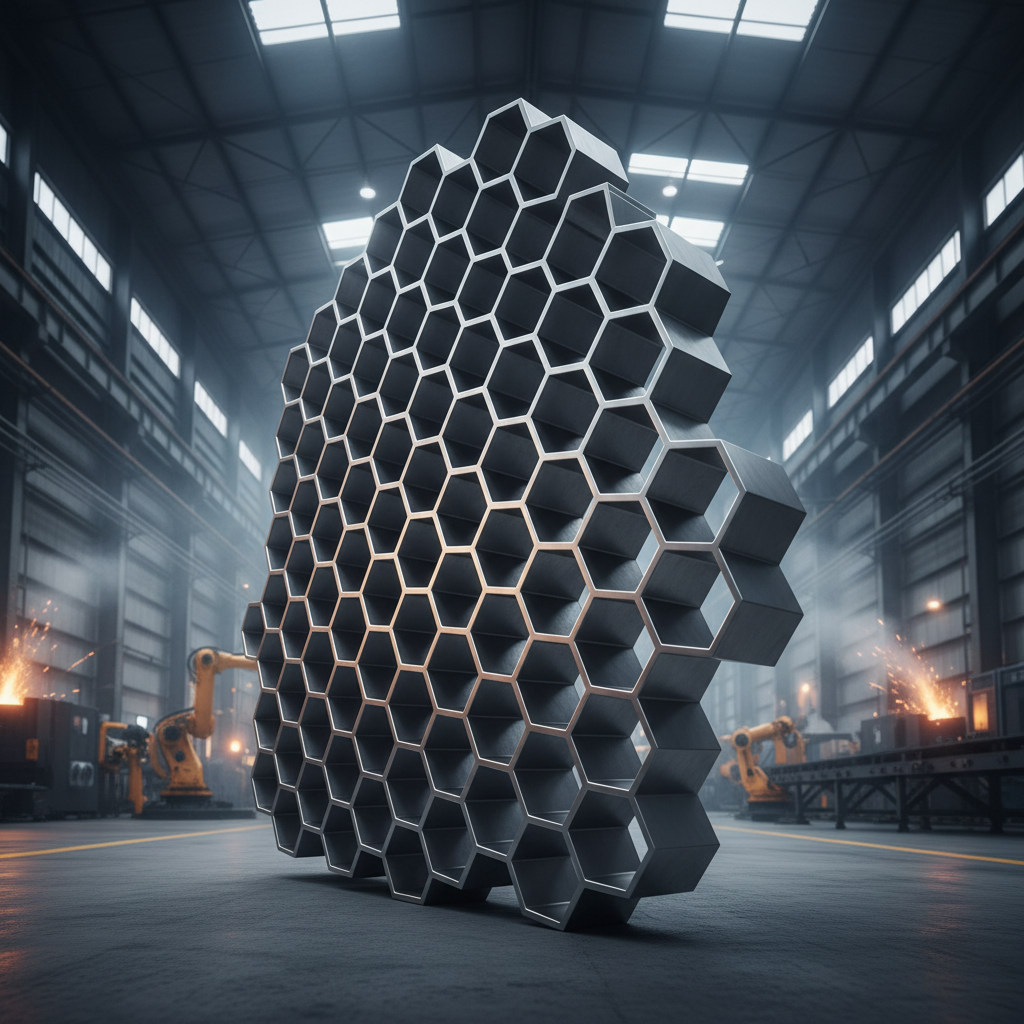
Stainless steel honeycomb is a structural material composed of a cellular arrangement of hexagonal cells made from stainless steel foil. This configuration creates a remarkably strong and lightweight panel, offering an exceptional strength-to-weight ratio. Unlike solid metal sheets, the honeycomb structure distributes loads efficiently, minimizing stress concentration and maximizing structural integrity. The cell size and foil thickness can be tailored to specific application requirements, allowing for customized performance characteristics.
Its connection to modern industry lies in the increasing demand for materials that can withstand harsh environments, reduce weight, and improve energy efficiency. In humanitarian needs, the rapid deployment capabilities of structures built with stainless steel honeycomb are invaluable. For example, rapidly deployable shelters for disaster relief can be constructed quickly and efficiently, providing safe and durable housing solutions in crisis situations.
The inherent corrosion resistance of stainless steel is crucial in demanding applications such as marine environments or chemical processing plants, ensuring long-term performance and minimal maintenance. This makes stainless steel honeycomb not just a structural component, but a sustainable long-term investment.
Key Factors or Core Components
Durability: Stainless steel’s inherent resistance to corrosion, oxidation, and wear provides exceptional longevity and minimizes the need for maintenance, even in harsh environments. This durability translates to lower life-cycle costs and increased reliability.
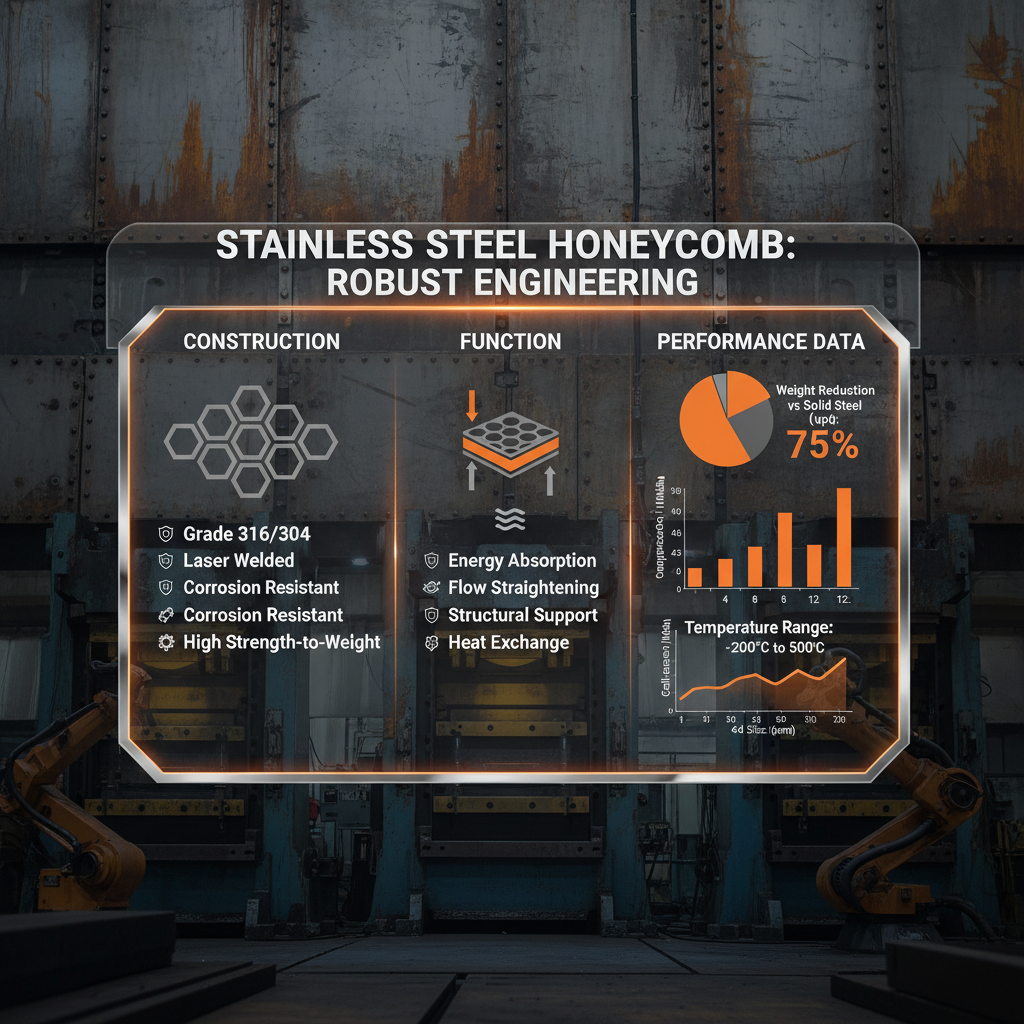
Strength-to-Weight Ratio: The honeycomb structure dramatically reduces weight compared to solid metal panels while maintaining or exceeding structural strength. This is critical in applications where weight reduction is paramount, such as aerospace and automotive industries.
Energy Absorption: The cellular structure effectively absorbs impact energy, making stainless steel honeycomb ideal for applications requiring crash protection or vibration damping. This property is particularly valuable in transportation and protective structures.
Design Flexibility: Stainless steel honeycomb can be easily formed into complex shapes and integrated with other materials, allowing for customized designs and versatile applications.
Thermal and Acoustic Insulation: The air-filled cells provide excellent thermal and acoustic insulation properties, reducing heat transfer and noise transmission.
Recyclability: Stainless steel is 100% recyclable, contributing to a circular economy and minimizing environmental impact.
Global Applications & Use Cases
Stainless steel honeycomb finds widespread application in the aerospace industry, particularly in aircraft flooring, control surfaces, and interior panels. Its lightweight properties contribute to fuel efficiency and reduced emissions. In the automotive sector, it is used in structural components, body panels, and energy-absorbing systems to enhance safety and improve vehicle performance.
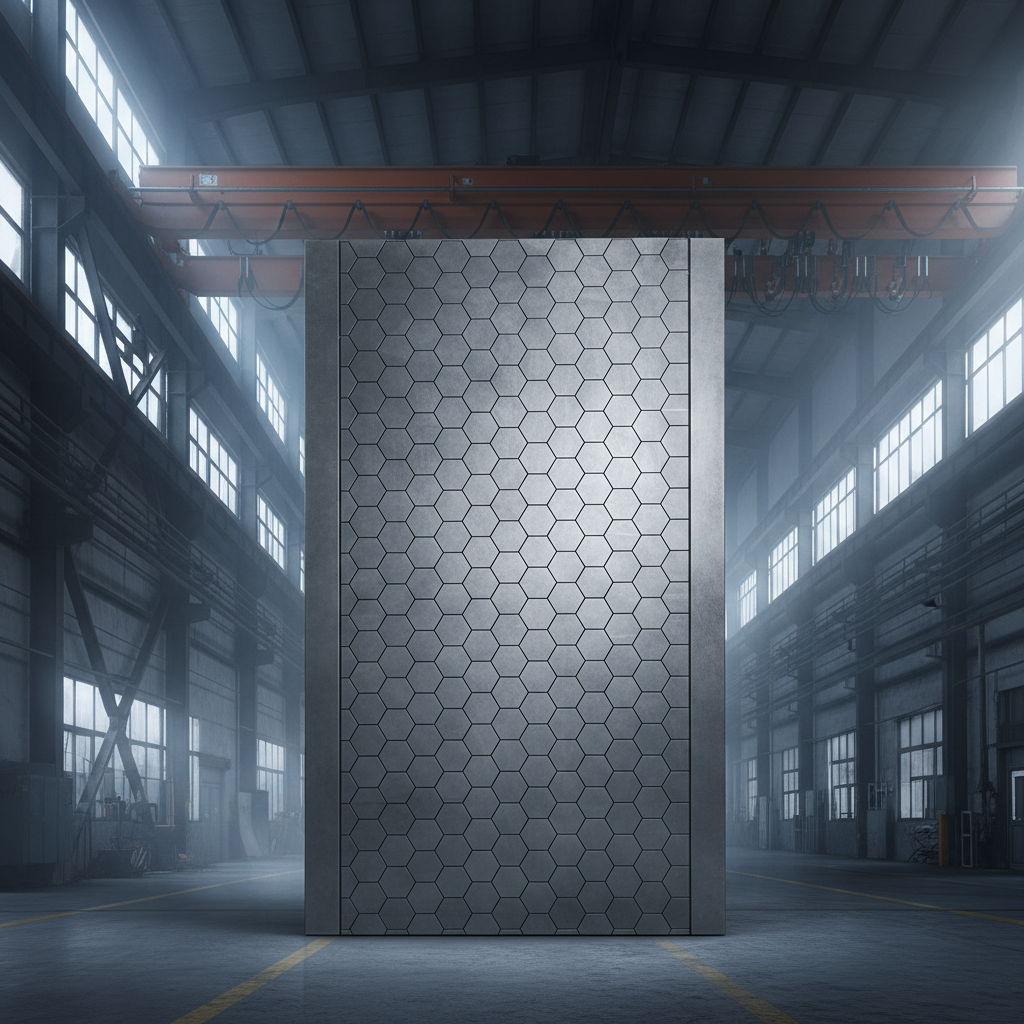
The architectural industry utilizes stainless steel honeycomb in facade cladding, roofing panels, and interior design elements, offering a sleek, durable, and energy-efficient solution. In post-disaster relief operations, rapidly deployable shelters constructed with stainless steel honeycomb provide safe and sustainable housing for affected populations.
In remote industrial zones, stainless steel honeycomb is employed in the construction of durable and corrosion-resistant structures, reducing maintenance costs and extending operational lifespan. Furthermore, the energy sector is leveraging its properties in wind turbine blades and solar panel supports, contributing to the development of renewable energy infrastructure.
Stainless Steel Honeycomb Application Performance
Advantages & Long-Term Value
The tangible benefits of employing stainless steel honeycomb are substantial. Cost savings arise from reduced material usage due to its lightweight nature and extended service life owing to its exceptional durability. Sustainability is enhanced through the recyclability of stainless steel and its contribution to reduced energy consumption in applications like aerospace and automotive.
The social impact is significant, particularly in disaster relief where rapid deployment and durable housing are critical. Reliability is paramount, especially in demanding environments where corrosion and wear are major concerns. Beyond these practical advantages, stainless steel honeycomb fosters a sense of safety and innovation, building trust in the longevity and performance of the structures it comprises.
From a logical perspective, the superior strength-to-weight ratio leads to optimized designs and improved efficiency. Emotionally, the use of durable and sustainable materials promotes a sense of responsibility and long-term value. This blend of practical and emotional benefits positions stainless steel honeycomb as a material of choice for forward-thinking projects.
Future Trends & Innovations
Emerging trends in materials science point towards the integration of stainless steel honeycomb with advanced composites and nanomaterials to create even higher-performance structures. Digital fabrication techniques, such as 3D printing, are being explored to enable the creation of complex honeycomb geometries tailored to specific application needs.
The development of bio-based stainless steel, utilizing renewable resources, represents a significant step towards further enhancing sustainability. Automation and artificial intelligence are being implemented in manufacturing processes to improve efficiency and reduce production costs. The integration of smart sensors within the honeycomb structure to monitor structural health and performance is also gaining traction, offering predictive maintenance capabilities.
Challenges & Solutions
One of the primary challenges associated with stainless steel honeycomb is its relatively higher cost compared to aluminum honeycomb. However, this cost can be offset by its superior durability, lower maintenance requirements, and longer service life. Another challenge lies in the complexity of manufacturing complex honeycomb geometries.
Solutions include the development of more efficient manufacturing processes, such as advanced laser cutting and forming techniques. Furthermore, research into alternative stainless steel alloys with improved formability and lower cost is ongoing. Employing design optimization techniques to minimize material usage and maximize structural efficiency can also help mitigate cost concerns.
Finally, fostering collaboration between material scientists, engineers, and manufacturers is crucial to overcome these challenges and unlock the full potential of stainless steel honeycomb.
Summary of Challenges and Potential Solutions
| Challenge |
Impact Area |
Severity (1-10) |
Potential Solution |
| High Initial Cost |
Economic Viability |
7 |
Lifecycle Cost Analysis & Value Engineering |
| Manufacturing Complexity |
Production Efficiency |
6 |
Advanced Automation & 3D Printing |
| Formability Limitations |
Design Flexibility |
5 |
Alloy Development & Optimized Forming Processes |
| Supply Chain Constraints |
Production Scalability |
4 |
Diversification of Suppliers & Strategic Partnerships |
| Joining Challenges |
Structural Integrity |
6 |
Advanced Adhesive Technologies & Mechanical Fastening Solutions |
| Limited Public Awareness |
Market Adoption |
3 |
Educational Initiatives & Industry Promotion |
FAQS
Stainless steel honeycomb offers significant advantages over aluminum, primarily in terms of corrosion resistance, durability, and higher operating temperature capabilities. While aluminum honeycomb is lighter and less expensive initially, stainless steel provides a much longer service life, reduces maintenance costs, and performs reliably in harsh environments. This makes it a more sustainable and cost-effective solution in the long run, particularly for applications exposed to corrosive elements or extreme temperatures.
Stainless steel honeycomb is typically manufactured through a process of precision cutting, foil expansion, and bonding. High-quality stainless steel foil is carefully cut into hexagonal patterns, expanded to create the honeycomb structure, and then bonded using adhesives or welding techniques. Rigorous quality control measures are implemented throughout the process, including dimensional inspections, material testing, and non-destructive evaluation to ensure structural integrity and adherence to industry standards.
In the aerospace industry, stainless steel honeycomb is widely used in aircraft flooring panels, control surfaces (ailerons, flaps, and rudders), and interior components like galleys and lavatories. Its lightweight properties contribute to fuel efficiency, while its strength and durability enhance structural performance and passenger safety. Its corrosion resistance is also crucial for withstanding the harsh conditions experienced during flight.
Yes, stainless steel honeycomb is highly customizable. The cell size, foil thickness, density, and overall dimensions can be tailored to meet specific design requirements. Manufacturing processes allow for complex geometries and the integration of features like holes or inserts. This flexibility makes it suitable for a wide range of applications, from simple panels to intricate structural components.
While the initial cost of stainless steel honeycomb may be higher, its extended service life, reduced maintenance needs, and recyclability often result in a lower lifecycle cost compared to alternative materials like aluminum or conventional steel. The elimination of frequent repairs and replacements, coupled with its resistance to corrosion and wear, translates to significant long-term savings.
Stainless steel is 100% recyclable, contributing to a circular economy and minimizing waste. Its durability reduces the need for frequent replacements, conserving resources and reducing environmental impact. Furthermore, its use in applications like aerospace and automotive contributes to improved fuel efficiency and reduced emissions. The use of sustainable manufacturing processes further enhances its environmental profile.
Conclusion
Stainless steel honeycomb represents a transformative material solution offering a compelling combination of strength, lightness, durability, and sustainability. Its versatile applications span across diverse industries, addressing critical challenges in aerospace, automotive, architecture, and disaster relief. The inherent properties of stainless steel, combined with the unique structural advantages of a honeycomb configuration, provide significant benefits in terms of performance, longevity, and cost-effectiveness.
Looking ahead, continued innovation in manufacturing processes, materials science, and digital fabrication will further unlock the potential of stainless steel honeycomb. By embracing this technology, industries can pave the way for more sustainable, efficient, and resilient solutions. To learn more about how stainless steel honeycomb can benefit your project, visit our website today.