


Honeycomb Segment Seal: Abradable, Low Leakage, High-Temp
Honeycomb Segment Seal: an insider’s guide to tighter turbines
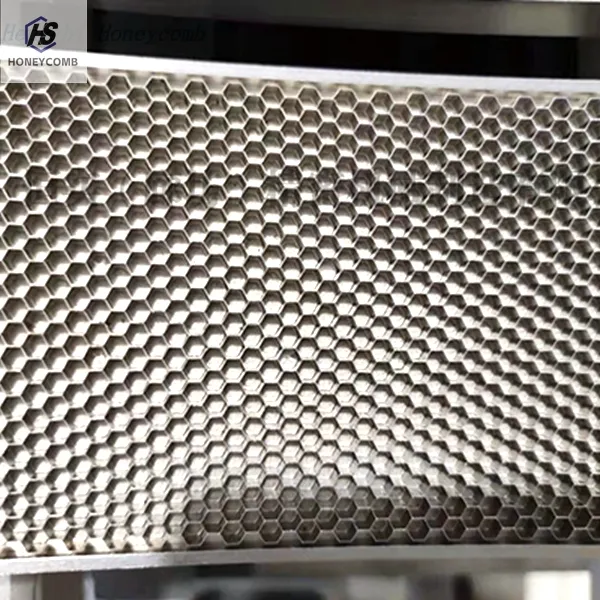
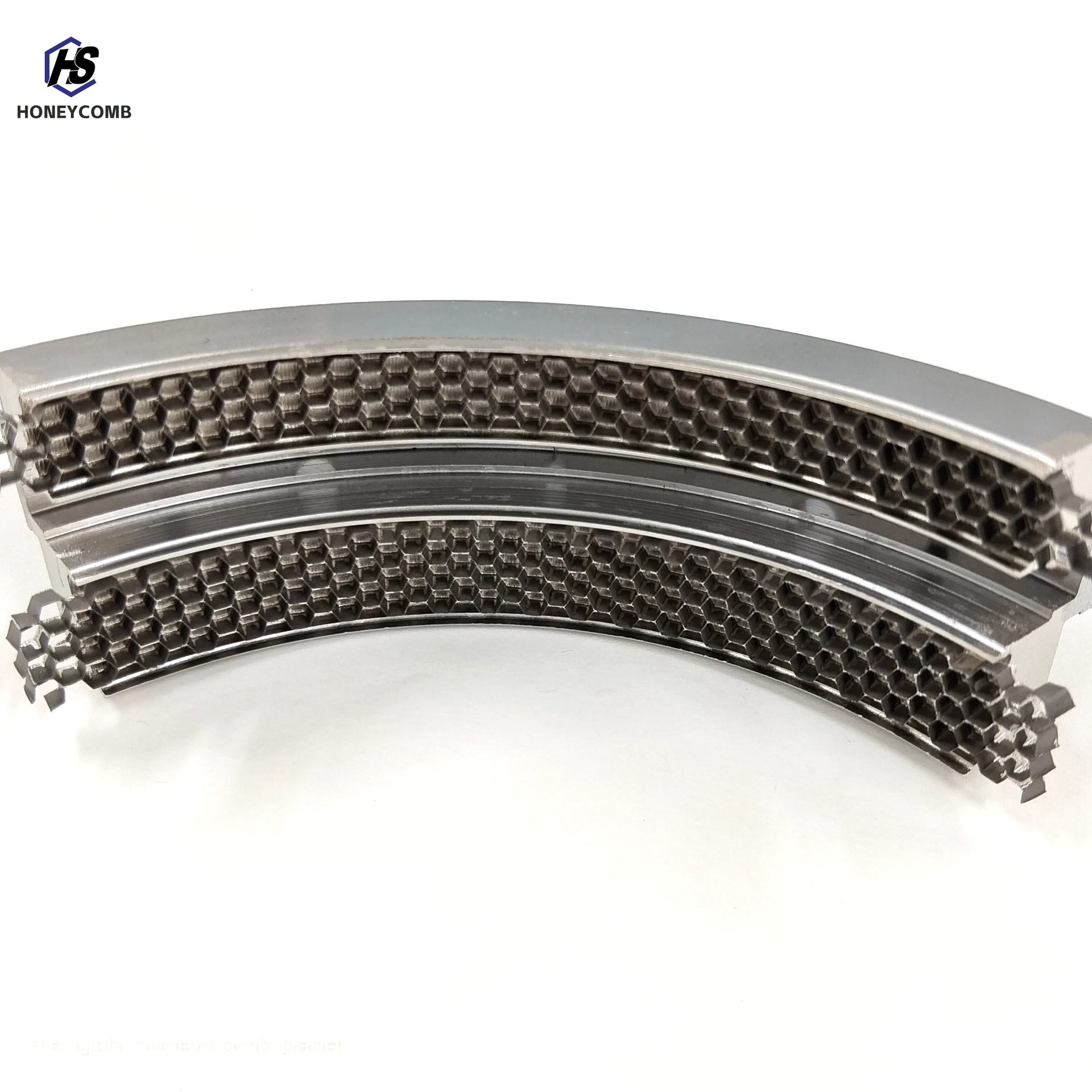
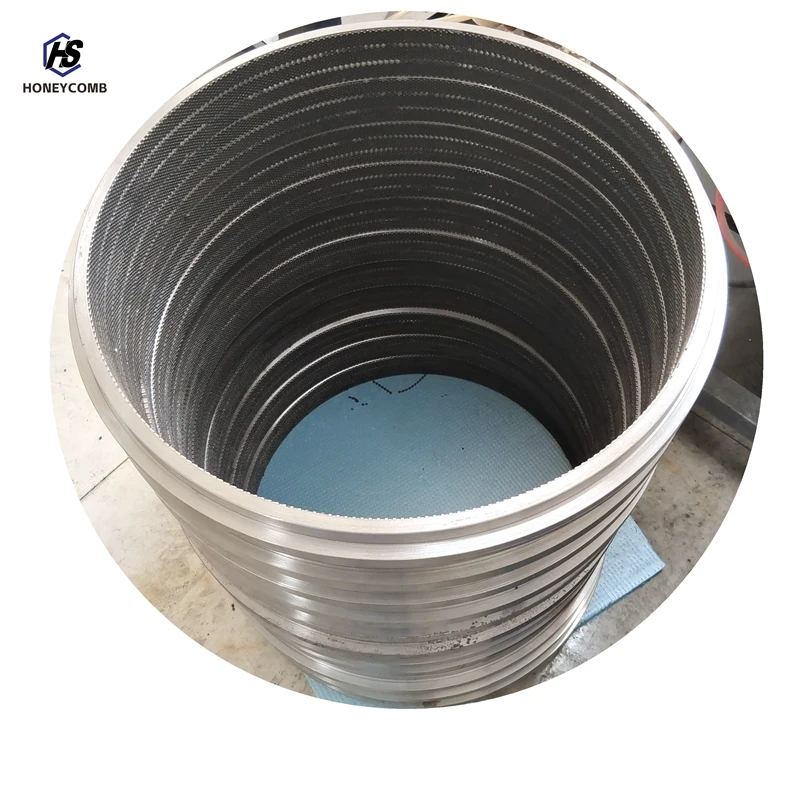
If you spend your days around hot gas paths and balance calculations (same here), you’ve probably noticed a quiet revolution in turbine sealing. To be honest, the move toward higher efficiency, hydrogen-ready fuels, and aggressive cycling has pushed operators to options that survive heat, rubs, and swirl. That’s where the Honeycomb Segment Seal keeps popping up—in gas turbines, aircraft engines, steam units, and high-speed compressors—because it controls leakage without wrecking rotordynamics.
What’s trending and why it matters
A few trends: higher firing temperatures, demand for lower specific fuel consumption, and stricter NOx limits. Surprisingly, a well-designed Honeycomb Segment Seal can shave leakage by double-digit percentages, which often translates to 0.1–0.4% simple-cycle efficiency gain—small on paper, big on a 25–200 MW frame. Many customers say the biggest win is stability: honeycomb texture breaks swirl and is forgiving during transient rubs.
Typical specs (real-world may vary)
| Parameter | Spec |
|---|---|
| Cell size | ≈ 0.5–1.5 mm |
| Foil wall thickness | ≈ 0.05–0.20 mm |
| Materials | Inconel 718/625, Hastelloy X, Haynes alloys; Ni-based braze (e.g., BNi-2) |
| Operating temp | up to ~950°C in hot sections (duty-dependent) |
| Clearance control | Designed interference/rub-tolerant with stable post-rub gap |
| Service life | ≈ 30,000–60,000 operating hours; inspections per outage plan |
| Origin | No.2, Tongda Street, High-tech area Gu'an County, Langfang, 065500, Hebei, China |
How it’s built and proven
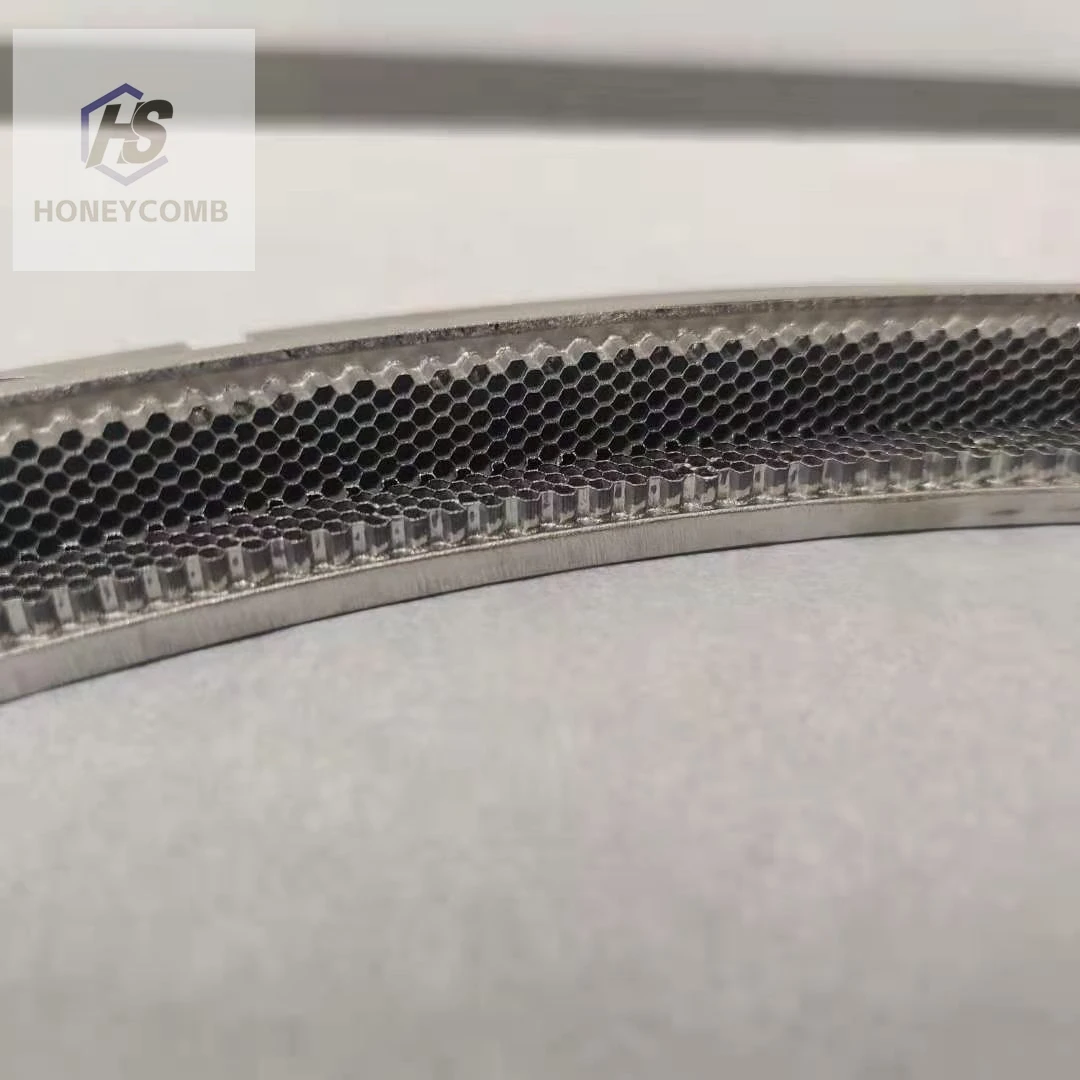
- Materials: Nickel superalloy foils formed into honeycomb; brazed to a precision backing segment.
- Manufacturing: Forming and tacking → vacuum brazing → finish machining of arcs/lands → optional anti-rotation features.
- QA & testing: Dye penetrant per ASTM E1417; helium leak check to ≈ 1×10⁻⁹ mbar·L/s; dimensional CMM; flow-bench evaluation referencing API 617 practice; metallurgy per ASTM E3/E407 (as needed).
- Certifications: AS9100D and ISO 9001:2015 at the facility level; material heat traceability maintained.
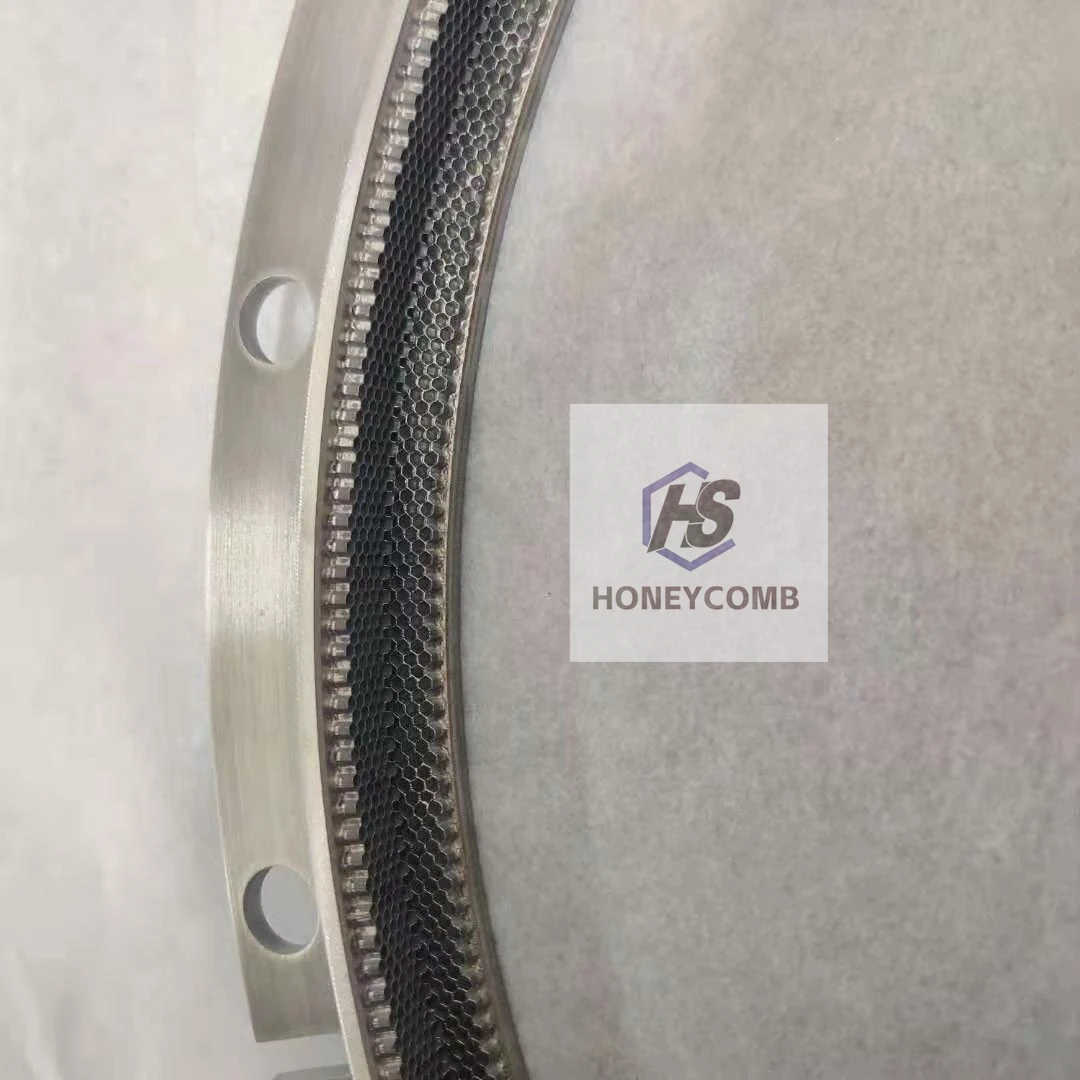
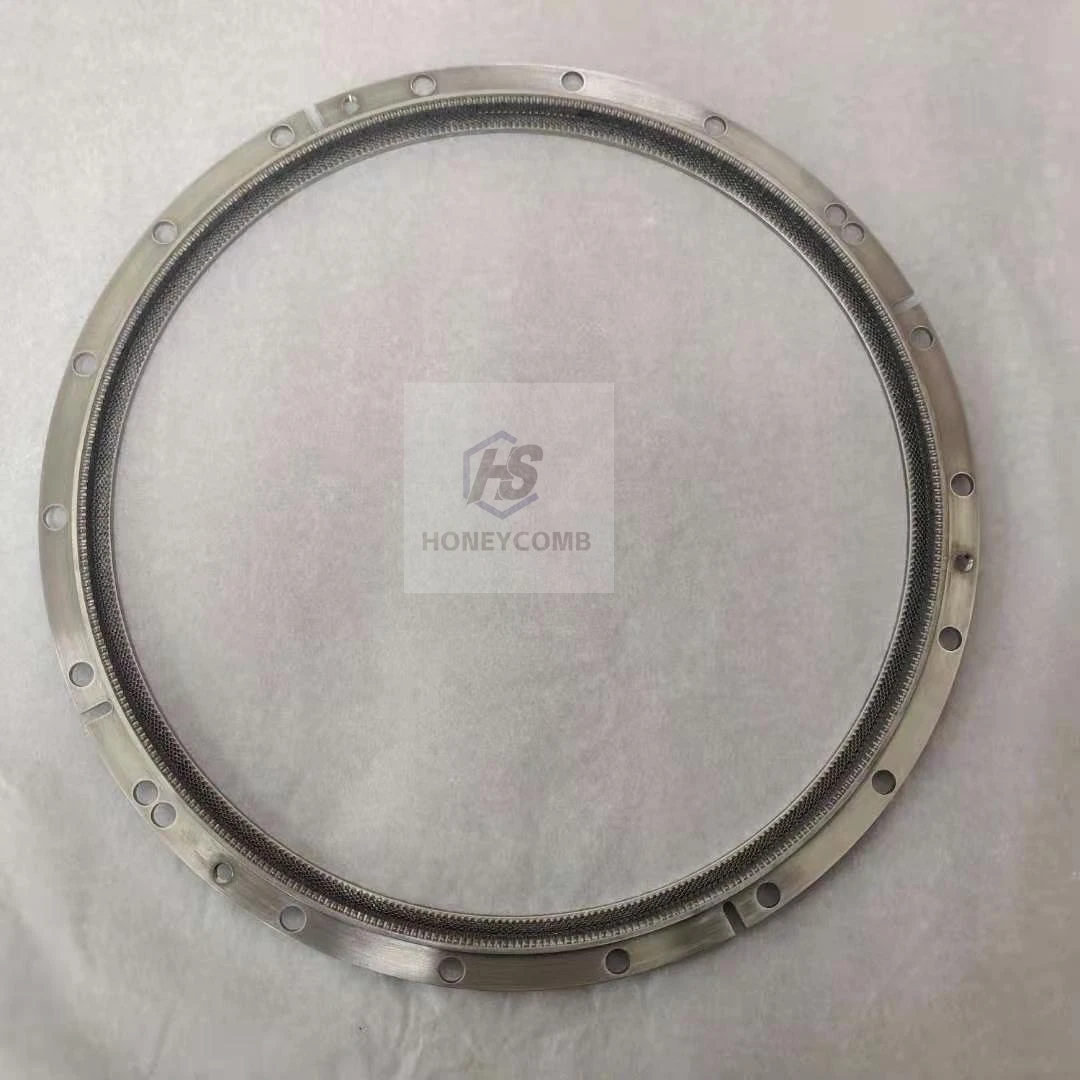
In fact, lab flow tests on a mid-frame Honeycomb Segment Seal ring (Ø ≈ 620 mm, 1.0 mm cell) showed ≈ 22–35% leakage reduction vs. smooth-land at comparable clearances, with stable post-rub behavior after 0.2 mm intentional incursion.
Where it’s used
Gas turbines (compressor discharge, HPT, IPT), jet engines (stator segments), steam turbines (HP/IP), and centrifugal compressors. Also shows up in hydrogen-blend pilot projects—thermal margins are tight, yet the Honeycomb Segment Seal copes well.
Vendor snapshot (indicative)
| Vendor | Lead time | Certs | Customization | Notes |
|---|---|---|---|---|
| HSHI Honeycomb (Langfang) | ≈ 4–10 weeks | ISO 9001, AS9100D | Cell/foil, segment arc, braze alloy, coatings | Cost-effective; strong vacuum-braze capability |
| OEM A (US) | ≈ 8–14 weeks | AS9100, NADCAP (process-specific) | Tight integration with OEM clearances | Premium pricing; seamless spares |
| Supplier B (EU) | ≈ 6–12 weeks | ISO 9001 | Broad alloy portfolio | Good on custom retrofits |
Customization options
- Cell size and foil gauge to tune leakage vs. rub tolerance.
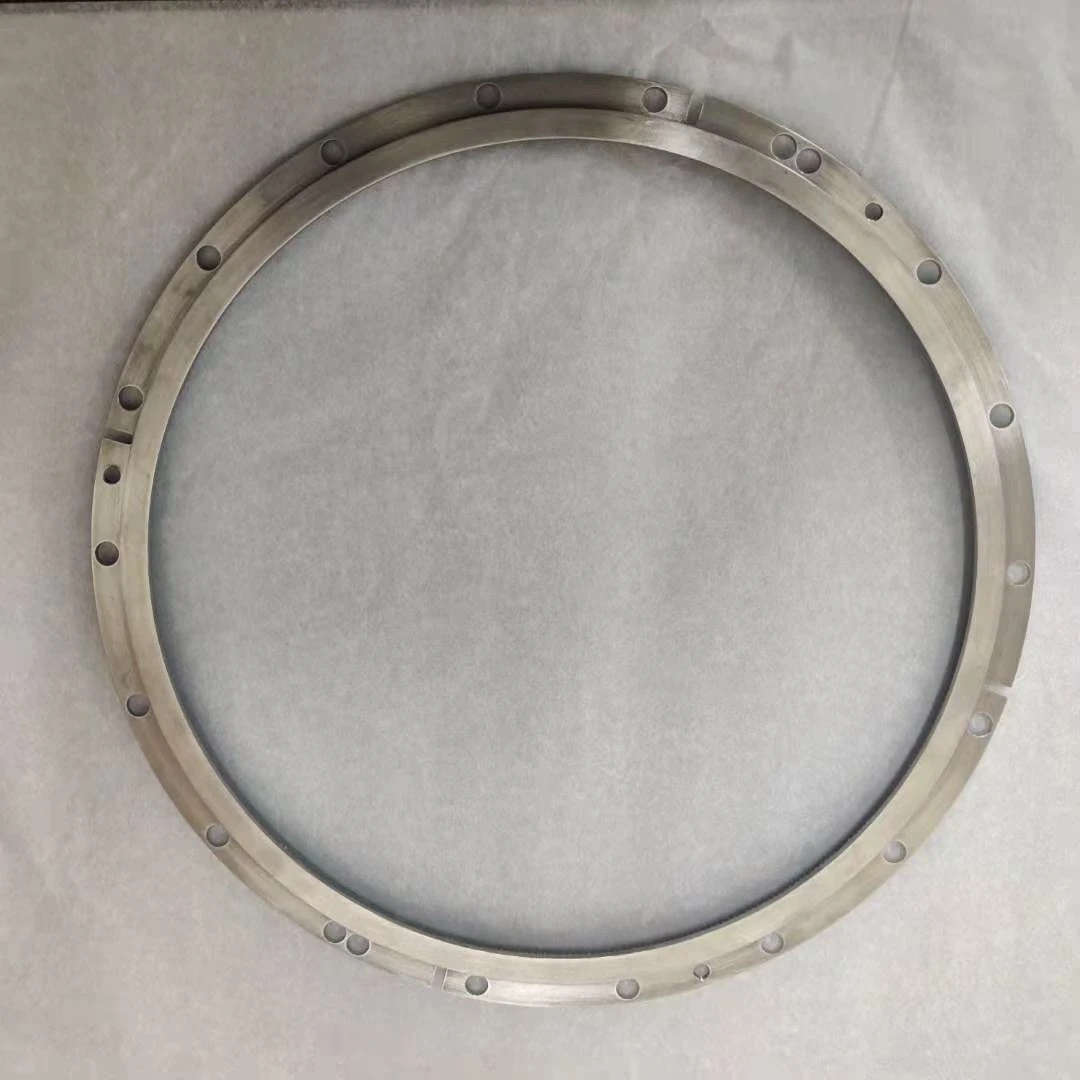
- Segment geometry (arc length, land features), anti-rotation tabs, keyed joints.
- Material sets for hot vs. cold sections; optional corrosion-resistant overlays.
Field notes (short cases)
- 25 MW gas turbine, Gulf region: retrofit Honeycomb Segment Seal on compressor discharge showed ≈ 1.2% power uptick and 0.3% heat-rate improvement; outage borescope after 6,000 h showed uniform post-rub texture.
- Narrow-body APU: hot-section segments with 0.8 mm cells reduced start transients’ rub severity; no unplanned removals across 3,200 cycles.
Feedback is pretty consistent—“easier starts, calmer vibrations, better repeatability.” I guess the texture does more than it looks.
Standards reference and compliance
Design and testing typically reference API 616/617 guidance for turbines/compressors, AS9100D for quality, and in-house flow rigs correlated to ASME PTC/industry methods. Always align with your unit’s OEM clearance philosophy and outage schedule.
- API Standard 616: Gas Turbines for the Petroleum, Chemical, and Gas Industry Services, American Petroleum Institute.
- API Standard 617: Axial and Centrifugal Compressors and Expander-compressors, American Petroleum Institute.
- AS9100D: Quality Management Systems – Requirements for Aviation, Space and Defense Organizations, SAE/IAQG.
- ASME PTC 10 / related test practices for compressors and seal performance correlation, ASME.

-
Industrial Airflow Guide for maf воздушная правильная машинаNewsApr.16,2026
-
Best maf струйно правильная машина for Industrial EfficiencyNewsApr.09,2026
-
Сотовая правильная машина A Comprehensive Guide to Honey Packing AutomationNewsApr.07,2026
-
Build Your Own DIY газоправильная Машина A Comprehensive Guide to Gas CorrectionNewsApr.04,2026
-
Understanding Кондиционер отопления Systems for Efficient and Comfortable HeatingNewsMar.31,2026
-
Comprehensive Guide to Cellular Blinds Installation Установка сотовых жалюзиNewsMar.28,2026
-
Mobile Aerodynamic Tunnel Design A Comprehensive Guide to Applications and ImplementationNewsMar.26,2026






 English
  Afrikaans
  Albanian
  Amharic
  Arabic
  Armenian
  Azerbaijani
  Basque
  Belarusian
  Bengali
  Bosnian
  Bulgarian
  Catalan
  Cebuano
  China
China  China (Taiwan)
  Corsican
  Croatian
  Czech
Czech  Danish
  Dutch
Dutch  Esperanto
  Estonian
  Finnish
  French
  Frisian
  Galician
  Georgian
  German
  Greek
Greek  Gujarati
  Haitian Creole
  Hausa
Hausa  Hawaiian
  Hebrew
  Hindi
Hindi  Miao
Miao  Indonesian
  Italian
  Japanese
  Javanese
  Malay
Malay  Persian
  Portuguese
  Punjabi
  Russian
  Spanish
  Swahili
  Telugu
  Vietnamese